Written by Patrick Stieg, Carver County, MN, 2023
“I think any group of people, who come to a conversation with the right attitude of wanting to better understand the views of others, can find the LRC approach as a good way to see each other as valuable human beings, despite our differences.”
I’ve worked for the last six years with the Carver County Public Health Department in suburban Minneapolis, Minnesota. We work to promote and protect the health and well-being of all our residents, but particularly those segments of our population that experience the greatest health inequities. I am the lead staff for coordinating our Community Health Assessment (CHA) every five years, and the resulting development and implementation of our Community Health Improvement Plan (CHIP).
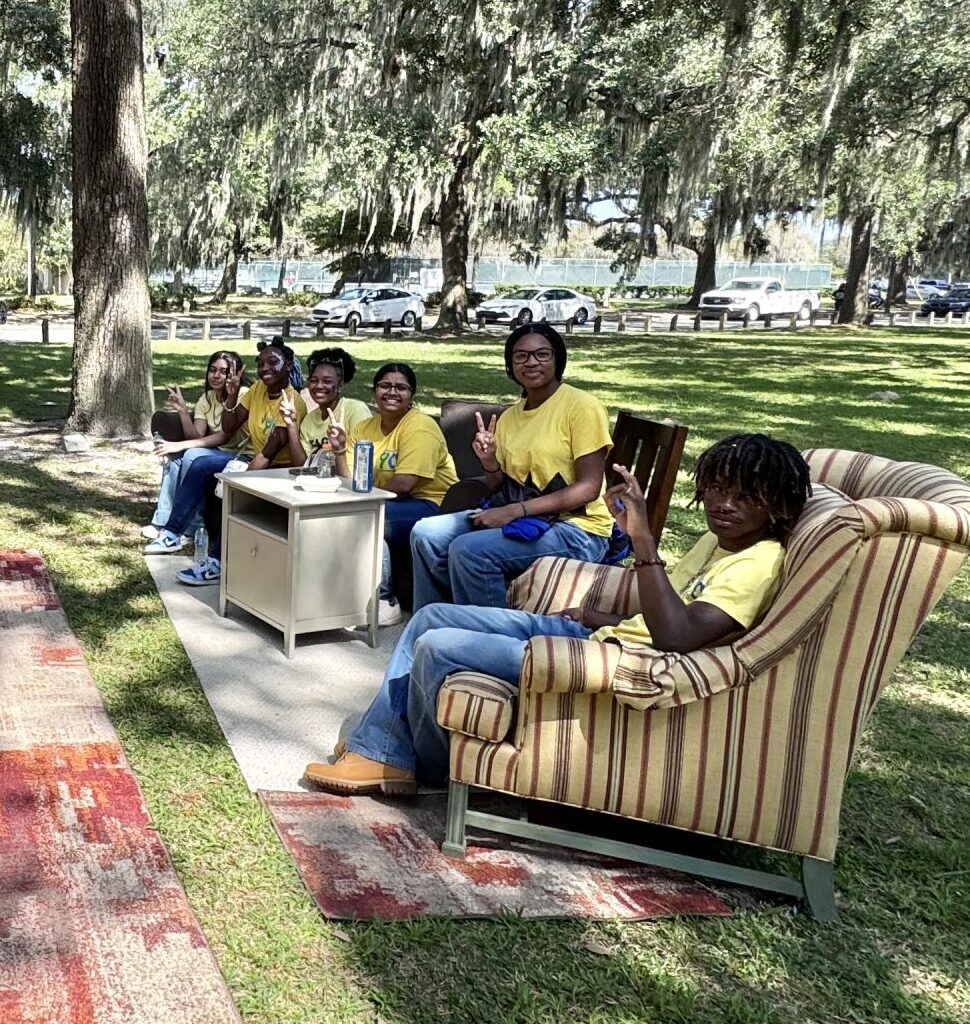
As part of our current CHIP, we have a goal to ‘Make Well-Being a Shared Value’ by having conversations in the community about how health starts in our families, in our schools and workplaces, in our playgrounds and parks, and in the air we breathe and the water we drink. We decided to approach this goal through the creation of “Communities of Belonging” (CoB), where everyone feels welcomed, safe, and significant regardless of their differences. In such communities everyone is respected, even if they disagree; people know each other, care about each other, and take care of each other, and everyone works together to create a thriving, vibrant community. And, as a result, everyone benefits.
After this initiative was established, I learned about the Living Room Conversations work in our newspaper. I thought that LRC could be a good resource for our CoB work as a way for local residents to have conversations around any topics they needed to and work together on a collective journey towards the creation of a local community of belonging.
As part of the CHA process, we do quite a bit of community engagement to listen to the needs, and the best solutions to meet those needs, directly from our residents – as much as we can. This involves conversations to better understand what they are experiencing in their daily lives. With the Communities of Belonging Initiative, we wanted to keep conversations going; to introduce interested residents to LRC topics, allowing them to experience the process, and determine how additional conversations might be helpful to their local CoB work.
The first 18 months of the COB initiative have experienced slow development in most of our communities. However, monthly LRC sessions were offered on a range of topics. Participation was fairly good and everyone felt satisfied with the conversations. Even with some very diverse perspectives and experiences expressed on each of the conversation topics, they went very well – with attendance regularly ranging from 2 to 9 people. The selected topics included Belonging, Civic Renewal, Communicating with Care, Mental Health, Politics: Can We Talk?, Unity & Politics, Weave the Social Fabric, Race & Ethnicity.
In two of our local CoB initiatives, they’ve reached a point where they want to have in-person LRC sessions on topics they feel are important in their respective communities. In one they want to have conversations to break down political divides, so they will begin with Politics and Elections. In another community they want to focus on race but will begin with America We Want to Be: Founding Aspirations. In both cases, the hope is that the LRC sessions will be the beginning of continued conversations, on the respective topic area within each community. Ultimately, the hope is to create a better understanding of the perspectives and beliefs of others within a community, so people can come together for the benefit of everyone.
Learning about and being a part of Living Room Conversations has been very meaningful to me personally, and very helpful professionally. Having respectful conversations with a genuine curiosity to better understand other people – their personal story and experiences, as well as their perspectives, opinions, and beliefs – is a cornerstone of bridging divides. Having the conversation agreements as a guide creates a safe space for people to be open and honest in their sharing with each other. With every conversation there is at least one person who shares a very personal story, among a group of people they barely know, if at all. This adds so much to the richness of the conversation, and I am so happy that those people feel comfortable enough in that setting to be open and vulnerable.
I think any group of people, who come to a conversation with the right attitude of wanting to better understand the views of others, can find the LRC approach as a good way to see each other as valuable human beings, despite our differences. This can work with family, friends, neighbors, co-workers, politicians, and anyone else. For those who never participated I might ask them “Have you ever wanted to better understand the views and beliefs you’ve heard expressed by others?” and “Have you ever felt like others don’t understand your beliefs and views, but you would like to speak with them, so they can better understand?”
Getting small groups of people with diverse backgrounds, perspectives, opinions, beliefs, and experiences together for a conversation on a topic using the LRC approach – can be the beginning of relationship building, where further conversations could occur. This could lead to some shared solution seeking, or at least some empathy for others who are different from us.
Patrick Stieg is a successful public health professional experienced in creating conditions that eliminate health inequities, through the creation of conditions which improve population-level health, through culturally appropriate, sustainable, community-driven interventions. His experience has included public and professional education, organizational and public policy changes, as well as changes to systems and environments. He has worked at the local, state, and national levels; within government agencies, non-profit voluntary organizations, and a health plan. https://www.linkedin.com/in/pat-stieg-405b3a34
Photo Credit: Carver Park Reserve. Explore Minnesota. (n.d.). https://www.exploreminnesota.com/profile/carver-park-reserve/2392