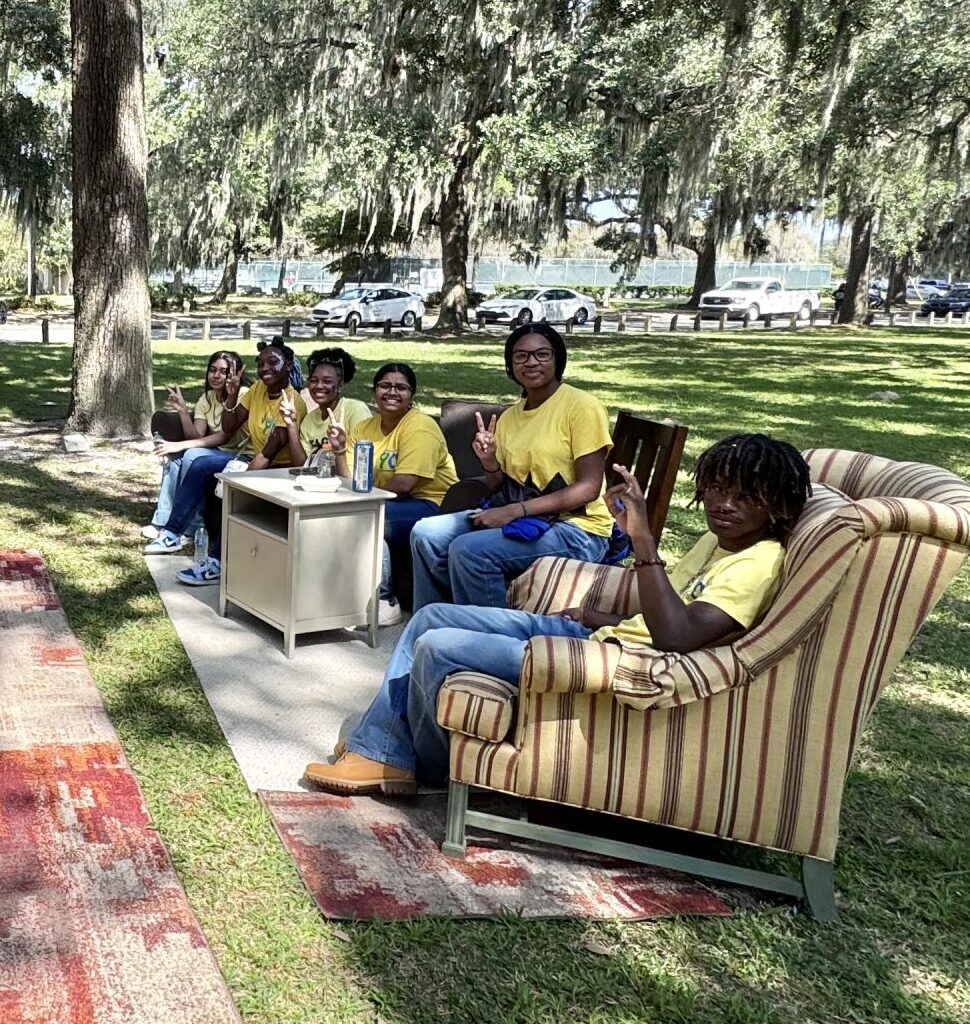
Conversation with Cara Rodriguez, Casper College, WY
Written January 2024
“I figured that yes, my job is to teach my students how to write a paper and create and structure an argument, but we can do that while talking about important things.” -Cara Rodriguez
Cara is an English Composition professor at Casper College and an active proponent of using Living Room Conversations in the classroom.
Casper College is a public community college in Casper, Wyoming, with a primary focus on student success that provides learning opportunities to enrich the lives of its students and community. The college had 4,614 enrolled students in 2023¹, a combination of young adult “traditional” students and non-traditional students (students pursuing education later in life). Casper College is a smaller higher education institution that takes seriously its mission of being student and community-focused.
Cara was first introduced to Living Room Conversations by a friend who participated in a community LRC event. This was at a particular time of racial unrest in the United States, and Cara explained, “I was reading comments online about the unrest, and it was so gross to me how people couldn’t have conversations about difficult topics without blowing up or defending themselves… I was so mad and had just heard about Living Room Conversations, so I scrapped my entire Composition 1010 curriculum and rebuilt it around Living Room Conversations.”
She continued, “I figured that, yes, my job is to teach my students how to write a paper and create and structure an argument, but we can do that while talking about important things. So I just got rid of the curriculum I had been using, and we started focusing the class on listening to the opposing opinion and genuinely hearing it without defending yourself against it.”
In explaining how Living Room Conversations are utilized in her classroom, Cara explained, “The idea of the conversation agreements are now in place in every single one of our classroom conversations.” Regarding conversation guides, Cara mentioned that the Tribalism guide is the one she always begins the semester with because “I feel like it’s such a great one to help students understand that labels don’t encompass the whole of a person. It also facilitates openness and listening in the classroom.”
Cara has organized her course curriculum into five themes: Race, Culture, Gender, Country, and Class. As part of learning about these themes, she utilizes the Living Room Conversation guides on Race, Immigration, Gender, American Ideals, and others.
Specifically regarding the conversations they have in the classroom about race, Cara explained, “We would start every session with a Living Room Conversation structure asking questions like ‘What were your first experiences with race?’ and ‘Were you taught about race as a child?’ Then, we would read multiple essays about race from different people’s points of view and have a conversation about those essays using the conversation agreements. The students would then write a paper based on what we had read.”
In thinking about the experience her students have had in engaging in Living Room Conversations ideals, Cara shared, “My Composition 1010 class last semester was wildly diverse for being in the middle of Wyoming. I told them at the beginning of the semester that we were not going to talk about abortion because I feel like people just end up debating, but we were talking about gender, and it came up, and I thought, ‘Well, I guess we’ll see what happens’ and it ended up being a wonderful conversation where people shared their stories, and people asked questions, and it was great.”
She further explained, “I generally don’t facilitate conversations on topics that could easily get heated because I want the conversations to be more about people’s experiences than about what they think or what their parents think. However, I do think the structure that Living Room Conversations gives allows those conversations to be able to happen.”
Continuing her reflection on students’ experiences with Living Room Conversations in the classroom, she said, “I know that oftentimes, even though my students are forced into these conversations, they’ve had really beautiful moments where they have their eyes opened to things they didn’t understand or a way to appreciate people they thought they didn’t like. They find themselves really excited to talk about these topics. They enjoy having conversations. This generation is ready to listen to people, and they want to understand people they don’t know, and that’s pretty cool.”
On top of having Living Room Conversations in her classroom, Cara has recently begun having monthly conversations with college staff, faculty, and administration. As with her classroom conversations, the first guide Cara used for these conversations was Tribalism. Since then, she’s hosted a conversation using the Gratitude guide and was crafting her own Christmas-themed guide.
Since she began using Living Room Conversations in her classroom, the practice has expanded to other areas in the college. She shared information on Living Room Conversations with the college communications department, and they began using the conversation guides in their social and behavioral science symposium.
Cara shared her optimism that participation in Living Room Conversations will help people shift how they think about the world. It will “make people understand that we’re all complex and that even though we may have labels that we give ourselves or that others give us, that doesn’t mean that everyone under that label is one thing.” Additionally, she believes that participating in Living Room Conversations helps individuals to “really appreciate someone different from you, even someone strongly opposed to something you really believe in.”
When asked if she had any final thoughts regarding Living Room Conversations and her involvement, she concluded, “I’m just so grateful that you’re out there; I wish more people knew about Living Room Conversations and would take the time to do it in their homes or wherever they’re at.”
- Casper College. (2023, October 17). About Casper College. Casper College. https://www.caspercollege.edu/about/ Photo Credit: Cara Rodriguez
Written by Cassidy Weaver, Living Room Conversations Community Engagement Partner